
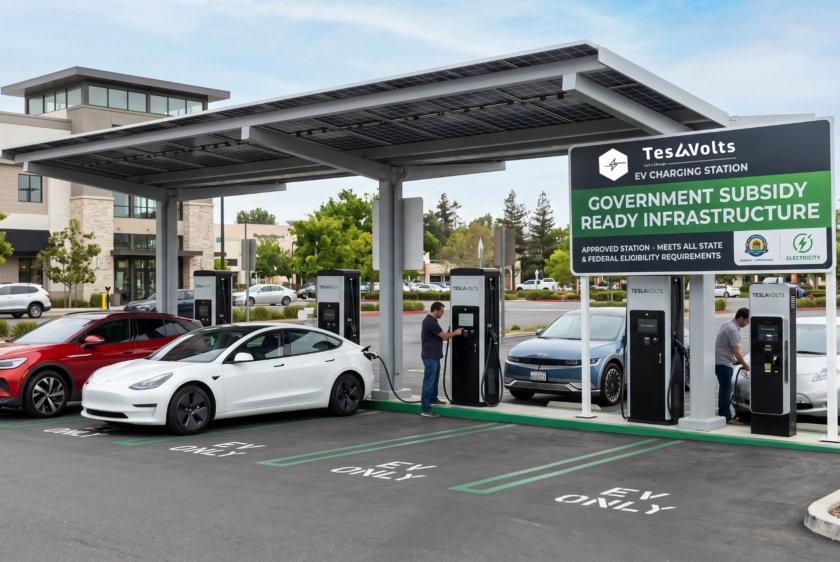
India’s electric vehicle (EV) revolution is accelerating at an unprecedented pace. With rising EV adoption, expanding charging networks, and strong government support, investing in EV charging infrastructure has become both a sustainable and commercially attractive opportunity.
One of the most common questions businesses, fleet operators, commercial property owners, RWAs, and institutions ask is:
“Can I get a subsidy for installing EV charging stations in India?”
The answer is yes, but the subsidy landscape varies depending on the state, type of charger, project size, and category of applicant.
This guide explains how EV charging subsidies work in India and how organizations can maximize available incentives.
Why the Government Supports EV Charging Infrastructure
The Government of India aims to reduce dependence on fossil fuels, improve air quality, and accelerate EV adoption nationwide.
To achieve these objectives, policymakers recognize that a robust charging network is essential. As a result, central and state governments have introduced multiple incentives to encourage the deployment of public and semi-public charging stations.
These incentives are designed to:
- Reduce initial infrastructure costs
- Encourage private investment
- Support fleet electrification
- Promote renewable energy integration
- Expand charging access in urban and rural regions
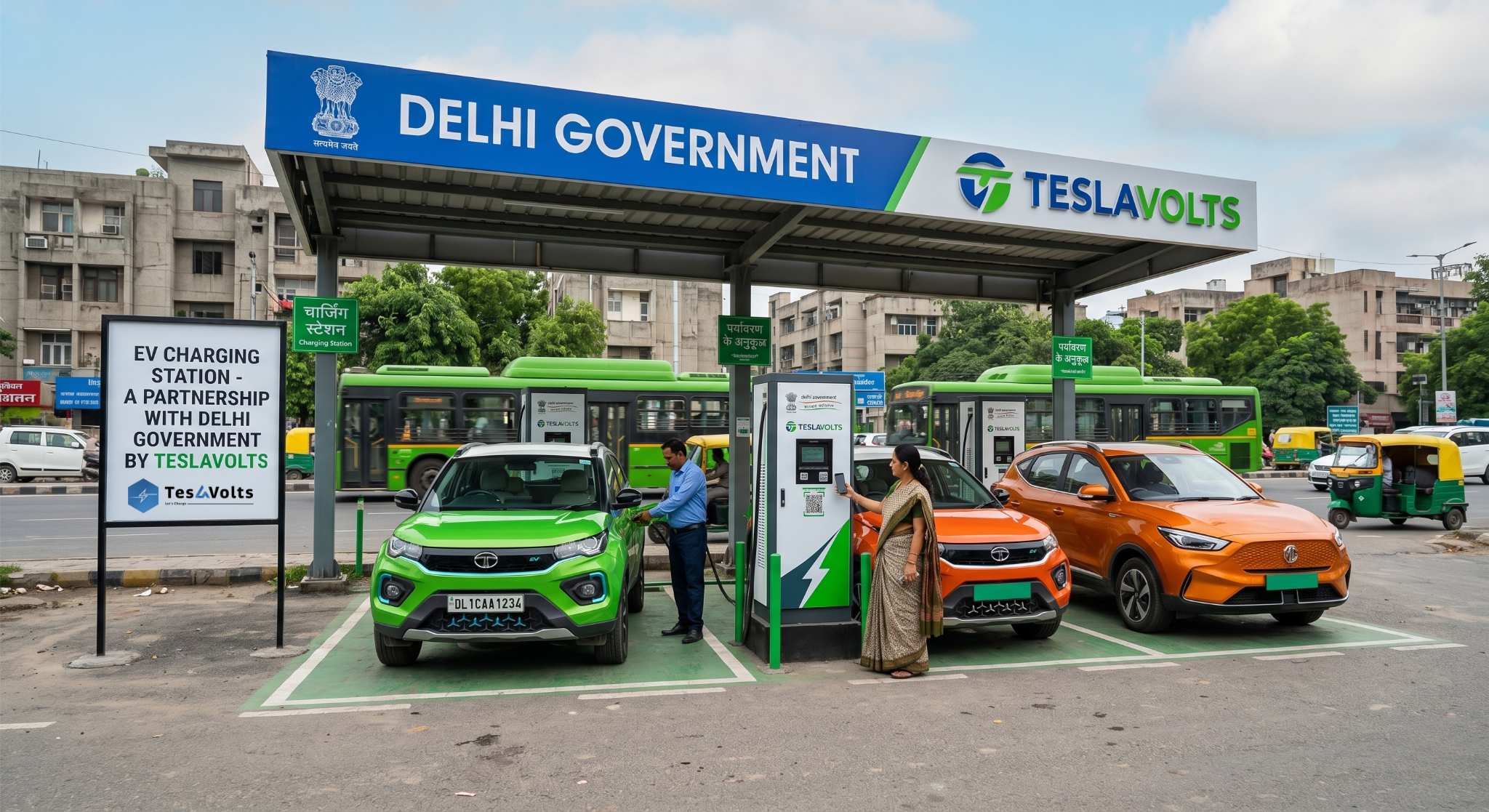
Understanding EV Charging Subsidies in India
Unlike vehicle subsidies that are often provided directly to consumers, charging infrastructure incentives are typically offered through:
1. Capital Subsidies
A percentage of the charger or project cost is reimbursed by the government.
Example:
A state government may reimburse 20–50% of eligible charging infrastructure costs, subject to predefined limits.
2. Electricity Tariff Benefits
Special EV charging tariffs may be lower than commercial electricity rates, reducing operating expenses.
3. Demand Charge Waivers
Certain states provide relief from demand charges during initial years of operation.
4. Land and Infrastructure Support
Public agencies may allocate land or facilitate charging infrastructure deployment at strategic locations.
5. Tax and Industrial Incentives
Businesses setting up EV charging networks may benefit from additional incentives under state EV policies.
Central Government Support
The Government of India has supported charging infrastructure development through national EV programs and initiatives.
Key areas of support include:
- Public charging station deployment
- Highway charging corridors
- Urban charging infrastructure
- Fleet electrification projects
- E-bus ecosystem development
While direct subsidies for individual charger buyers are limited at the central level, government programs often fund charging deployment through public agencies, oil marketing companies, municipal bodies, and approved operators.
Businesses should regularly monitor notifications from relevant ministries and nodal agencies for new opportunities.
State-Level EV Charging Incentives
Many of the most attractive charging infrastructure incentives are offered by state governments.
States such as:
- Delhi
- Uttar Pradesh
- Maharashtra
- Gujarat
- Tamil Nadu
- Karnataka
- Telangana
- Kerala
- Odisha
have introduced EV policies containing provisions related to charging infrastructure.
The benefits may include:
- Capital subsidies
- Installation incentives
- Interest subsidies
- Electricity duty exemptions
- Land-use benefits
- Fast-track approvals
Because policies are periodically updated, eligibility and incentive amounts differ across states.
Who Can Apply for EV Charging Subsidies?
Depending on the policy framework, eligible applicants may include:
Commercial Property Owners
- Shopping malls
- Hotels
- Hospitals
- Educational institutions
- Corporate offices
Fleet Operators
- Logistics companies
- Delivery operators
- Taxi aggregators
- Employee transportation providers
Fuel Retailers
- Petrol pumps
- Highway service stations
- Multi-fuel energy hubs
Residential Communities
- Housing societies
- Apartment complexes
- Residential developers
Charging Point Operators (CPOs)
Companies focused on operating public charging networks often qualify for infrastructure incentives.
Typical Documents Required
Although requirements vary by state and scheme, applicants are generally asked to provide:
- Business registration documents
- PAN and GST details
- Electricity connection details
- Site ownership or lease documents
- Charger invoices
- Installation completion reports
- Photographs of the charging station
- Compliance certificates
- Network connectivity documentation
Maintaining proper project documentation significantly improves approval efficiency.
Common Mistakes That Delay Subsidy Approvals
Many projects experience delays due to avoidable issues:
Incomplete Documentation
Missing invoices, certificates, or ownership records can slow approvals.
Non-Compliant Equipment
Using chargers that do not meet prescribed standards may result in disqualification.
Incorrect Application Category
Applicants sometimes apply under schemes for which they are not eligible.
Delayed Filing
Several incentives operate on a first-come, first-served basis.
How Teslavolts Helps Customers Navigate EV Charging Incentives
At Teslavolts, we understand that navigating subsidy programs can be complex, especially when policies vary across states.
Our team assists customers with:
- Site assessment
- Charger selection
- Compliance planning
- Documentation support
- Installation execution
- Charging network integration
- Long-term operations and maintenance
Whether you are a commercial property owner, fleet operator, residential developer, or enterprise customer, the right charging strategy can significantly improve project economics and accelerate return on investment.
The Road Ahead
India’s EV ecosystem is entering a phase of rapid expansion. As governments continue supporting charging infrastructure deployment, organizations that act early can benefit from lower capital costs, stronger sustainability credentials, and new revenue opportunities.
Understanding available incentives is no longer optional—it is an important part of building a financially viable EV charging project.
The future of mobility is electric, and a well-planned charging infrastructure investment today can create long-term value for businesses, communities, and the nation.
About Teslavolts
Teslavolts delivers intelligent EV charging solutions for residential, commercial, fleet, and public charging applications. From smart AC chargers and high-power DC fast chargers to advanced charging management software and energy optimization technologies, Teslavolts is committed to powering the next generation of sustainable mobility.
Interested in setting up an EV charging station? Contact Teslavolts for a subsidy assessment and customized charging infrastructure proposal.


